Table Of Content

Further back, in August 2019 Raytheon received a $349m contract for phase two of the MST Rapid Deployment Capability to improve the Tomahawk cruise missile system. What sets the Tomahawk apart from other types of munitions is that combination of size, speed, distance and trajectory. Traditional saturation bombing–in which hundreds of bombs are dropped from a plane–is powerful, but not accurate. Saturation bombing also requires the use of a pilot and crew, which endangers personnel. The missile uses the satellite-based Global Positioning System (GPS), the motion sensor-based Inertial Navigation System (INS), and mapping and modeling of terrain through Terrain Contour Matching (TERCOM), as well as active radar homing. The Tomahawk is equipped with its own radar transceiver, enabling it to find and track its target autonomously.
America's Tomahawk Cruise Missiles Is Shrinking—And Fast
However, Canadian CSC frigates and Australian Hobart-class destroyers are also planned to eventually deploy these long-range land attack weapons. The Tomahawk cruise missile has been in service since the 1980s but continuously upgraded to the new Block V variants, which includes an anti-ship missile capability. The Tomahawk distinguishes itself from other classes of cruise missiles as it can be reprogrammed mid-flight based on tactical Link 16 data.
UK's customizable Paveway IV bomb proves effective across array of target scenarios
Both China and North Korea possess large arsenals of land-based ballistic missiles (and cruise missiles and hypersonic glide vehicles) that would could be unleashed to destructive effect against Japan in event of a high-intensity conflict. Notably, should the U.S. come into conflict with North Korea or China, Japanese airbases hosting U.S. military aircraft would probably come under attack—a scenario that may cause Tokyo to retaliate militarily. The Tomahawk made its debut in live combat during the Persian Gulf War in 1991. On January 17, the USS Paul F. Foster launched the first Tomahawk missile, and nearly 300 additional missiles were launched from U.S. The new weapon proved instrumental in bringing a swift end to the war.
Everything To Know About Tomahawk Missiles: Speed, Cost, And Destructive Power
The upgrades would develop the Block IV TLAM into the MST variant, to aspirational reach initial operational capability (IOC) in FY2022. On December 17, 2009, 41 civilians–mostly women and children–were killed by missiles targeting an alleged Al-Qaeda training camp in Yemen. Although U.S. and Yemeni government officials initially denied responsibility, an investigation by Amnesty International—and revelations by WikiLeaks—eventually concluded that the missiles had been American Tomahawks launched from a naval vessel. With a proven combat track record spanning over 40 years, the Tomahawk has earned its place as the preferred long-range cruise missile. The Tomahawk is the most reliable and cost-effective missile for its range, accuracy and warhead size.
Stay up-to-date with missile defense
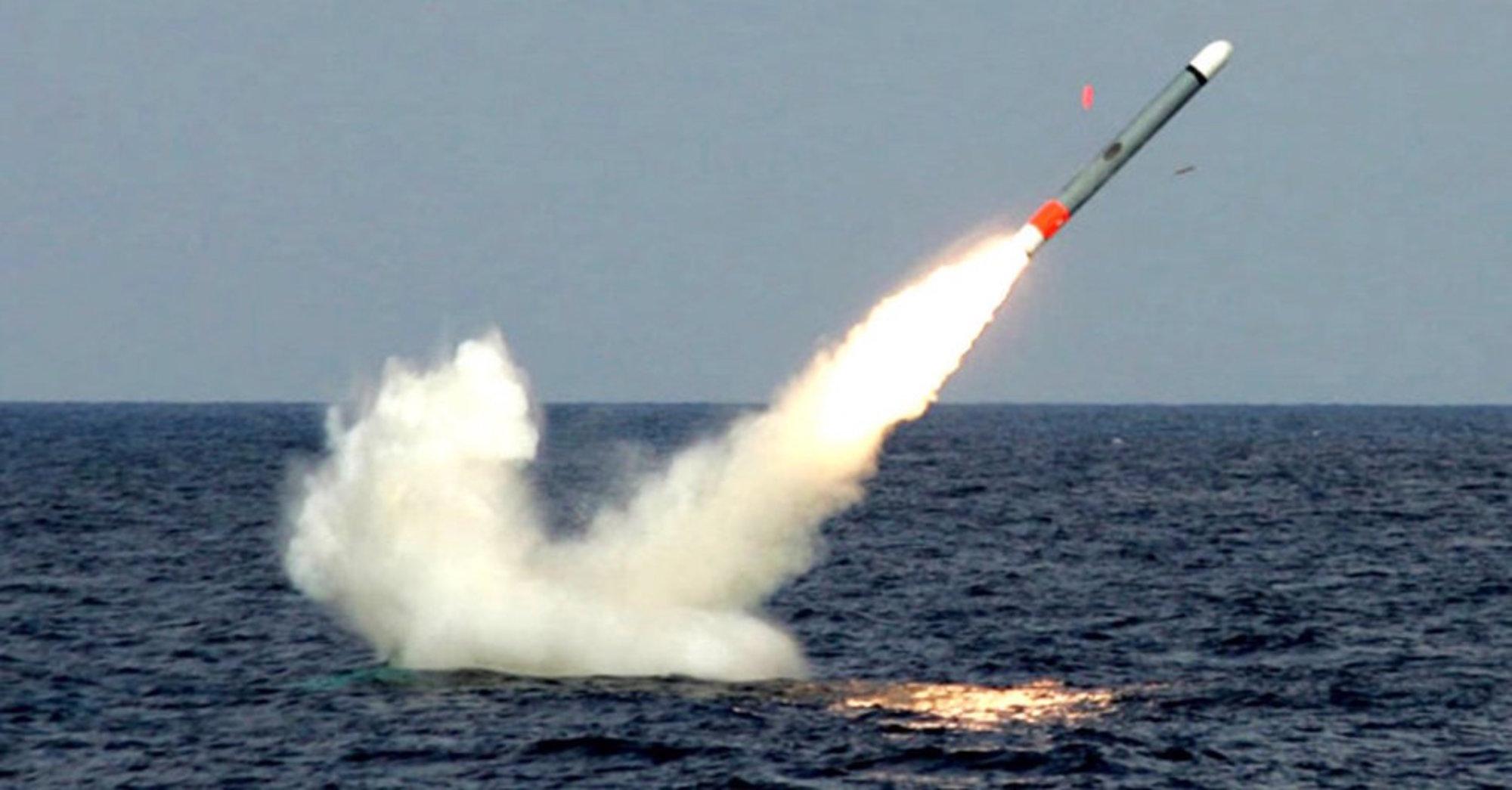
Now, just as we did with air-launched weapons and decoy flares, we aim to change that. Submarine-launched Tomahawk missiles entered service in 1983 with conventional (i.e., nonnuclear) land-attack and antiship missile variants, as well as with a land-attack missile carrying a nuclear warhead. The nuclear variant has since been retired, and a land-attack cluster-bomb variant that disperses bomblets has been added. By the start of the Persian Gulf War in 1991, Tomahawks had been fitted to surface ships.
Tomahawk's Chops: xGM-109 Block IV Cruise Missiles - Defense Industry Daily
Tomahawk's Chops: xGM-109 Block IV Cruise Missiles.
Posted: Fri, 16 Feb 2024 08:00:00 GMT [source]

The request was for up to 200 Tomahawk Block IV All Up Rounds and 200 Tomahawk Block V AURs, along with weapon control systems. The Tomahawk is a key weapons system manufactured by RTX, which has sought to maintain its relevance in the evolving battlespace through spiral development and upgrades. As a result, RTX garners a considerable share of the global missile market, partly as a result of the famed TLAM. In 2022, RTX, then Raytheon Technologies, was awarded a $217.1m fixed-price-incentive, firm-fixed-price contract for the full-rate production of Block V Tactical Tomahawk missiles, to be delivered to the US Navy, US Marine Corps, and US Army. Development of what would become the Tomahawk began in the 1940s, but the emergence of the Polaris ballistic missile program led to its shelving.
Navigation
The Tomahawk is capable of "loitering," meaning that, provided the missile has enough fuel, it can fly around in circles to relay information or wait for the right target. It has a range of around 1,500 miles, meaning that the ship or submarine launching the missile is well out of harm's way. Raytheon was awarded a $346m production contract for 473 Tomahawk Block IV cruise missiles in March 2006.
Royal Canadian Navy
Four Ohio class nuclear ballistic missile submarines were converted into cruise missile submarines for firing Tomahawk missiles. The Virginia class submarines and the Royal Navy Astute class submarines were also fitted with new vertical launch modules for Tomahawk missile. The U.S. Navy states that 140 total craft are capable of launching Tomahawks. That number consists of Ohio-class submarines, Arleigh Burke-class destroyers, and more. The United States Army has also tested launching Tomahawks from ground-based platforms.
It can be armed with a nuclear or unitary warhead or a conventional submunitions dispenser with combined-effect bomblets. The missile has a 5.56m length, 51.8cm diameter and a 2.67m wingspan. The Block Va variants will be named Maritime Strike and have the capability of hitting a moving target. RGM / UGM-109C (Block III TLAM-C) is a conventional unitary variant, carrying a 1,000lb-class warhead.
Additionally, it flies at an altitude of between 100 and 300 feet, much lower than conventional fighter aircraft. The Block IV Tomahawk missile is outfitted with advanced electronic support measure (ESM) seeker in Block IV Tomahawk missile. Its joint multi-effects warhead enables the commander to control the blast. The Tomahawk is designed to operate at very low altitudes while maintaining high-subsonic speeds. Its modular design enables the integration of numerous types of warheads, guidance and control systems.
Block III added GPS, eliminating a time-consuming programming system that required 80 hours to plot a missile’s course as well as a loitering capability. Tomahawks can launch from the Mark 41 vertical-launch systems aboard surface ships or from a submarine’s own vertical launchers or torpedo tubes. All told, the Navy deploys around 10,000 Tomahawk launchers, although only a fraction of that total at any given time actually carries cruise missiles. Japan’s military also is reportedly planning to build a ‘test boat’ to study equipping Japanese submarines to fire Tomahawks. Unless Japan builds a new class of cruise missile submarines with vertical launch cells, these would have to be launched horizontally from torpedo tubes, permitting only a low-volume attack.
The Tomahawk Land Attack Missile (TLAM) can strike high-value or heavily defended land targets. The Block II TLAM-A missile achieved initial operating capability in 1984. The missile was first deployed in combat during Operation Desert Storm in 1991. The Navy could fire them in combat as a sort of operational test “to demonstrate their capabilities,” Red said. The Navy plans to cycle all of its Block IV cruise missiles through a mid-life “recertification,” during which Raytheon will add a new guidance system.
The Tomahawk missiles are manufactured in America by one of the world's biggest defence contractors, Raytheon Technologies. The fourth iteration of Tomahawks, referred to as Block IV, can strike targets 1,600 kilometres away and barrels towards it at Mach 0.74 (913.8 km/h). Australia could buy as many as 220 guided Tomahawk missiles from the United States that would help the nation to "contribute to missions of mutual interest". While the Tomahawk isn’t as stealthy or fast as some modern successors, it’s been heavily improved over the years. Indeed, in November this year the US State Department made a determination approving a possible Foreign Military Sale (FMS) to the Government of Japan of Tomahawk Weapon System and related equipment for an estimated cost of $2.35bn.
The United States and United Kingdom had also launched strikes against 36 Houthi targets in Yemen on February 3. "CENTCOM identified these missiles and USVs in Houthi-controlled areas of Yemen and determined they presented an imminent threat to US Navy ships and merchant vessels in the region," it said. The Tomahawk Land Attack Missile (TLAM) is playing a major role in the United States' ongoing strikes against Houthi targets and its efforts to protect international shipping in the Red Sea.


No comments:
Post a Comment